Choosing a Used Semi Trailer for Tractor requires more than comparing prices and photographs. The right trailer must match your tractor’s fifth-wheel height, towing capacity, braking system, and daily cargo demands. A mismatch can create uneven wear, poor handling, and expensive downtime.
Begin with the trailer’s frame, suspension, axles, kingpin, and floor. Look closely for fresh paint covering corrosion, uneven welds, bent rails, or cracks near stress points. Inspect the tires for irregular wear, sidewall damage, and mismatched tread depths. Check brake components, lights, air lines, doors, seals, and landing gear. Small defects often reveal neglected maintenance.
Service records matter.
Ask when the bearings, brakes, tires, and suspension parts were replaced. Confirm the trailer’s dimensions and payload rating against your typical loads. A dry van may suit packaged goods, while a flatbed may serve machinery or construction materials. Refrigerated equipment needs additional checks for insulation, temperature control, and cooling-unit hours.
An independent technician should inspect the trailer before purchase. Their report may identify problems that a quick yard inspection misses. Still, no inspection is perfect. Hidden corrosion, tired wiring, or future maintenance needs can appear later. Budget for repairs instead of spending every dollar on the purchase price.
Reliable dealers should provide clear ownership records, inspection details, and realistic condition reports. Compare several trailers, verify compatibility with your tractor, and consider total operating cost. A cheaper trailer is not always the better investment. The safest choice is a properly matched trailer with documented maintenance and enough remaining service life for your business.
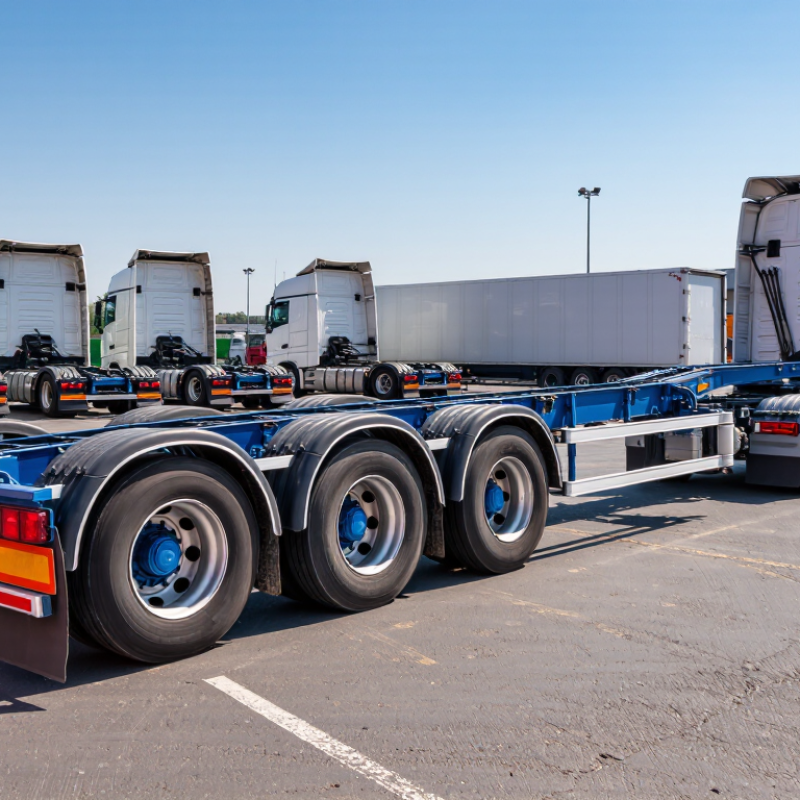
How to Choose a Used Semi Trailer for Your Tractor?
Define Your Tractor and Hauling Requirements
Start with the tractor, not the trailer. Check its rated fifth-wheel capacity, axle limits, engine output, and braking system. A trailer may look affordable, yet exceed the tractor’s safe operating range. Measure the fifth-wheel height too. Poor alignment can cause uneven loading and tire wear.
Define the freight you will carry. Palletized goods need usable deck length and interior height. Construction materials may require a stronger floor and higher payload rating. Refrigerated cargo demands reliable insulation and temperature equipment. Consider your regular routes as well. Steep grades, narrow yards, and rough roads can expose weaknesses quickly.
Inspect the used trailer in daylight. Look beneath the frame for cracks, heavy rust, bent cross-members, or fresh paint hiding repairs. Check tires for uneven wear. Test the lights, brakes, landing gear, doors, and suspension. Request maintenance records and compare them with the trailer’s physical condition. Records can be incomplete. That matters.
Tips: Write down your tractor’s exact limits before shopping. Carry a tape measure and flashlight. Match the trailer to your normal load, not your largest imagined load. Confirm current weight, dimension, and safety requirements for your operating areas. I would also budget for repairs, because even a clean-looking trailer may need seals, hoses, or brake work. A second inspection is rarely wasted.
| Requirement Area | Typical Requirement or Data Range | Used Trailer Selection Target | Why It Matters | Inspection or Compatibility Check |
|---|---|---|---|---|
| Tractor Fifth-Wheel Height | Common loaded fifth-wheel heights are approximately 46–52 in (117–132 cm), depending on tractor configuration and suspension. | Choose a trailer whose kingpin and landing-gear position allow the trailer to remain level when coupled. | An incorrect height can cause poor weight distribution, trailer instability, excessive tire wear, or insufficient clearance. | Measure the tractor at normal operating height and compare it with the trailer’s measured ride height before purchase. |
| Fifth-Wheel Coupling | Most highway tractors use a 2 in (50.8 mm) kingpin, while heavy-duty applications may use a 3.5 in (88.9 mm) kingpin. | Match the kingpin size, coupling plate design, and allowable vertical load to the tractor’s fifth wheel. | A mismatched coupling system may be unsafe or impossible to connect. | Check kingpin diameter, wear, cracks, mounting bolts, upper coupler plate, and fifth-wheel locking-jaw engagement. |
| Payload Requirement | Many general freight operations require approximately 40,000–48,000 lb (18,144–21,772 kg) of usable payload, subject to legal limits. | Select a trailer with a rated gross vehicle weight and tare weight that leave sufficient legal payload capacity. | A trailer that is too heavy reduces cargo capacity and may increase operating costs. | Verify the manufacturer’s identification plate, empty weight, axle ratings, tire ratings, and local weight regulations. |
| Trailer Length | Common enclosed freight trailers are 48 or 53 ft long; shorter configurations are used where maneuverability is more important. | Choose the shortest legal length that accommodates the usual cargo volume and loading pattern. | Longer trailers provide more cubic capacity but may be harder to maneuver and restricted on some routes. | Confirm overall combination length, turning clearance, rear overhang, and route restrictions. |
| Interior Dimensions | A standard dry van commonly provides about 101 in of interior width and 110–114 in of interior height, depending on design and floor thickness. | Allow clearance for pallets, packaging, cargo height, forklift loading, and load-securing equipment. | Usable interior space can be less than advertised because of wall liners, roof bows, logistics posts, or floor repairs. | Measure the actual interior width, height, floor length, door opening, and usable cubic volume. |
| Trailer Type | Dry vans suit general freight; refrigerated trailers suit temperature-controlled cargo; flatbeds suit oversized or open-load freight. | Select the body style according to cargo sensitivity, loading method, weather exposure, and delivery requirements. | The wrong body type can create cargo damage, compliance problems, and unnecessary maintenance costs. | Review the cargo profile, loading docks, temperature range, side-access needs, and tie-down requirements. |
| Axle and Suspension Configuration | Tandem trailer axles with common axle ratings around 20,000–23,000 lb each are widely used for highway freight. | Match axle ratings and suspension type to cargo weight, road conditions, and the tractor’s operating region. | The axle group affects legal payload, ride quality, tire wear, and service costs. | Inspect axle tubes, suspension hangers, air bags or springs, torque arms, bushings, alignment, and slider operation. |
| Slider Axle Position | Sliding tandem axles commonly provide several feet of adjustment to balance axle loads and meet bridge-formula requirements. | Choose a functioning slider with enough adjustment range for the tractor wheelbase and regional weight laws. | Limited adjustment may prevent legal axle loading even when total gross weight is acceptable. | Test locking pins, rails, stops, air release system, and movement across the full adjustment range. |
| Floor Load Capacity | General freight floors are often designed for forklift loading, but capacity varies by floor construction, condition, and load distribution. | Select a floor rating suitable for concentrated wheel loads and the heaviest pallet or machine being carried. | Overloaded or damaged flooring can fail during loading or transit. | Look for soft spots, cracked boards, delamination, broken cross-members, water damage, and uneven repairs. |
| Braking System | Heavy semi trailers generally use air-operated service and parking brakes with drum or disc brake assemblies. | Confirm that the trailer braking system is compatible with the tractor and meets current inspection requirements. | Brake defects affect stopping distance, tire wear, safety, and road legality. | Inspect chambers, hoses, valves, slack adjusters, linings or pads, drums or rotors, ABS components, and air leakage. |
| Electrical and Air Connections | A tractor-trailer normally requires service air lines and a standardized electrical connection for lighting and braking-related systems. | Ensure connection locations and connector types match the tractor without unsafe adapters or stretched lines. | Poor connections can cause lighting, braking, or communication-system failures. | Test all lamps, ABS warning functions, air-line seals, gladhand condition, cable routing, and connector corrosion. |
| Tires and Wheels | Heavy trailer tires commonly use commercial load ranges such as 14- or 16-ply ratings, with size and inflation requirements varying by axle load. | Allow for safe tread depth, matched tire specifications, and sufficient load capacity at the recommended pressure. | Tires are a major operating expense and reveal alignment, suspension, or overloading problems. | Check tread, sidewalls, irregular wear, age markings, wheel cracks, stud condition, rim damage, and inflation pressure. |
| Cargo-Securing Equipment | Common equipment includes logistic tracks, load bars, tie-down rings, straps, chains, edge protection, and bulkheads. | Select equipment that matches cargo weight, shape, loading method, and applicable cargo-securement rules. | Adequate restraint reduces cargo movement, product damage, and compliance risk. | Verify that tracks and anchor points are firmly attached and free from deformation, corrosion, or missing hardware. |
| Frame and Structural Condition | A used trailer may show surface corrosion, repaired panels, welds, or frame wear depending on age and operating environment. | Prefer a structurally sound trailer with documented repairs and no critical cracks, bends, or severe corrosion. | Structural damage can reduce load capacity and create expensive safety issues. | Inspect main rails, cross-members, landing-gear mounts, rear frame, suspension mounts, roof supports, and weld areas. |
| Documentation and Compliance | Required documents vary by jurisdiction but may include title, registration, inspection records, maintenance history, and ownership records. | Buy only when identification numbers, ownership documents, specifications, and inspection status can be verified. | Missing or inconsistent records can delay registration and conceal previous damage or unauthorized modifications. | Compare identification plates and serial numbers with paperwork, service records, inspection reports, and local legal requirements. |
Include the purchase price, inspection fees, registration, insurance, and immediate repairs. Tires, brakes, lights, and suspension parts may increase costs quickly. Keep money for unexpected downtime. Cheap is not always cheaper.
A dry van suits boxed freight and protects cargo from weather. A flatbed fits machinery, steel, and oversized loads. It requires suitable tie-down equipment. Refrigerated trailers need careful cooling and insulation checks.
Request the original title, registration records, bill of sale, maintenance records, and inspection reports. Match the identification number on the frame, documents, and listing. Confirm legal ownership and check for unresolved financing claims. Do not guess.
Examine the frame, kingpin, axles, floor, doors, tires, brakes, lights, and electrical connections. Look for corrosion, cracked welds, bent crossmembers, and uneven tire wear. A clean exterior can hide weak flooring. Use a flashlight.
Compare at least three similar trailers in the same region. Adjust the price for tire age, brake condition, payload rating, and expected repairs. Age alone is not enough. Numbers can mislead.
Yes, bring a qualified trailer technician when possible. Ask for written findings about the frame, air lines, brakes, suspension, and coupling system. Small air leaks can cause costly delays. I once underestimated them.
Be cautious when the seller refuses inspection or avoids clear paperwork. Fresh paint may conceal rust. Missing records increase uncertainty, though they do not prove damage. Trust discomfort sometimes. Walk away when key facts remain unclear.
Use a traceable payment method and keep copies of every document. Sign a written agreement describing condition, equipment, and payment terms. Confirm local registration, safety, weight, and transport requirements. Check again.
Choosing a Used Semi Trailer for Tractor requires a clear understanding of your hauling needs, tractor specifications, typical cargo, travel distances, and operating conditions. Start by setting a realistic budget that includes inspection, repairs, registration, and future maintenance. Then select a trailer type with suitable dimensions, load capacity, suspension, and features for your work.
Before purchasing, carefully inspect the frame for cracks or corrosion, and check the axles, brakes, tires, lights, landing gear, doors, and other equipment. Review the trailer’s identification details, maintenance records, ownership history, and required documents to confirm that it can be properly registered and operated in your area. Compare its condition and age with similar trailers to judge whether the asking price is reasonable. A professional inspection and a written purchase agreement can help reduce unexpected costs and make the transaction safer. Take your time, ask questions, and choose reliability and suitability over a low initial price.